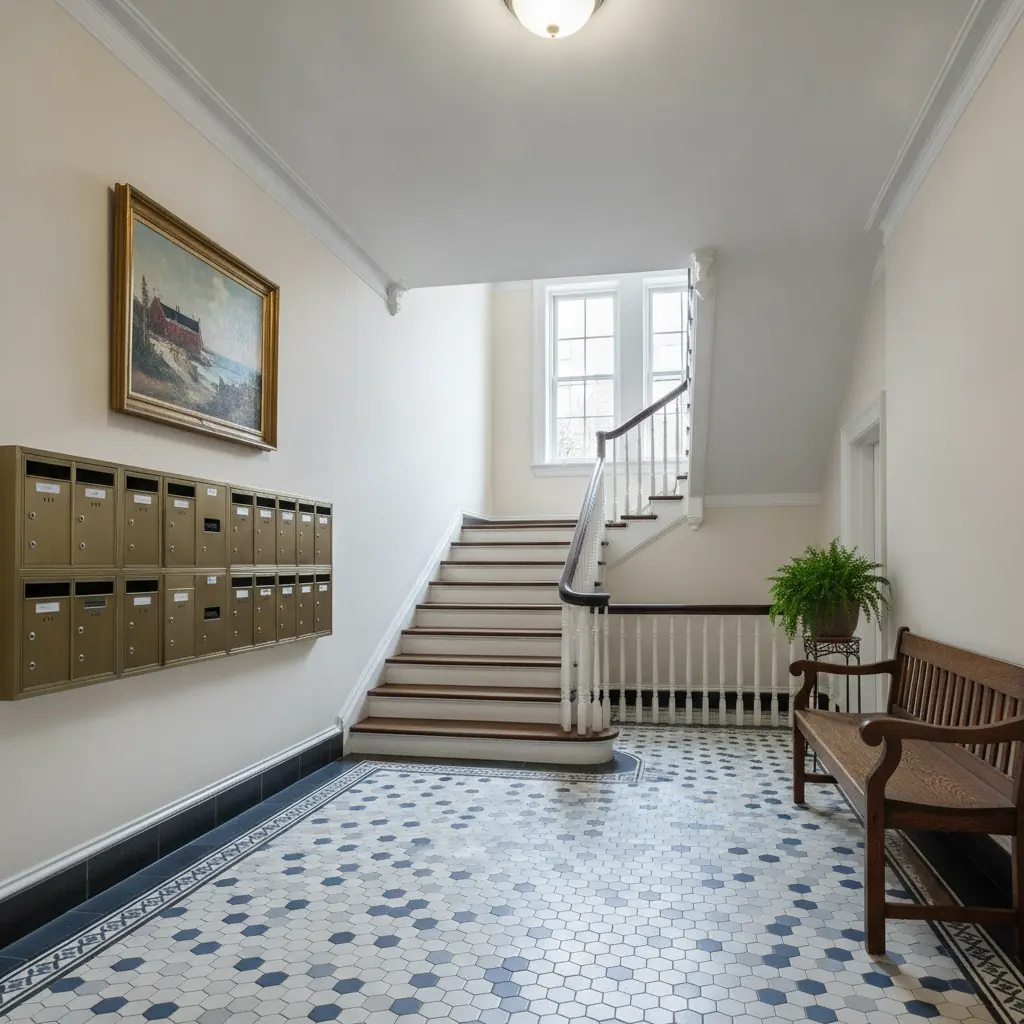
Tenants judge a building in the first ten seconds. Before anyone opens their own door, they walk up the front steps, through the entry, past the mailboxes and up the stairs. If those spaces look tired, the whole building feels tired, no matter how nice the units are.
This guide is for landlords and small property owners around Boston: the triple-decker owner in Somerville, the investor with a six-unit brick building in Brighton, the family renting out two floors in Revere. Here is what common areas really include, how often they need attention, what to agree on in writing with a cleaner, and why the outside of the building matters as much as the inside.
What counts as a common area in a Boston multifamily building
A common area is any space that more than one household uses and no single tenant is responsible for. In a typical Greater Boston building, that list is longer than most owners expect.
Inside, it usually means the front entry and vestibule, hallways and landings, stairs and banisters, the mailbox area, entry door glass, light switches and handrails, and any shared laundry room in the basement. Trash and recycling areas count too, whether that is a back porch, a side alley spot or a small room by the rear door. Basements with storage cages or a boiler room door that tenants pass every day also collect dust and grime.
Outside, think front steps, the walkway from the sidewalk, the porch, the entry door and its frame, railings and the area around the trash bins. In triple-deckers, the back stairs and stacked rear porches are often the tenants' real everyday route, so they deserve the same attention as the front.
What a good common area cleaning actually covers
A useful routine visit is more than a quick sweep. Most professional cleaners working in shared spaces will typically handle:
Floors: sweeping and mopping halls, landings and stairs, including the corners and the edges of each step where dirt packs in. Vacuuming runners or carpeted stairs if there are any.
Touch points: wiping banisters, handrails, door handles, light switches, intercom panels and mailbox fronts. These are the surfaces every tenant touches several times a day.
Glass and doors: cleaning the inside of entry door glass and sidelights, and wiping fingerprints and scuffs from doors and baseboards.
Laundry and trash areas: wiping machine tops and folding surfaces, cleaning lint and dust from the floor, and sweeping and wiping down the trash and recycling spot so it does not smell or attract pests.
Odds and ends: removing cobwebs from stairwell corners and ceilings, dusting window sills and radiators in the halls, and picking up flyers and junk mail that pile up by the door.
How often: building size and tenant turnover
There is no single right schedule, but a few patterns work well as a rough guide.
A two or three family house or triple-decker with light traffic often does fine with a cleaning every two weeks, plus an extra visit when something happens, like a muddy week in March. A building with four to twelve units usually needs weekly attention, because more people means more mud, more mail and more trash trips. Larger buildings, or any building with heavy foot traffic, may need cleaning more than once a week in the busy spots.
Season matters a lot in New England. In winter, salt and sand get tracked up the stairs every day, leaving white residue on floors and steps. In spring, pollen settles on the porch and entry. In fall, wet leaves get carried in. Many owners bump up the schedule from December to March and go back to normal in summer.
Then there is September 1. Boston's big lease turnover day, especially around Allston-Brighton and near the colleges, means moving trucks, scraped walls, dropped boxes and a lot of debris in halls and stairs. Booking a common area cleaning right after the moves finish, and another one a week or two later, helps new tenants start on the right foot. Book early, because cleaners' calendars fill up fast in late August and early September.
What to put in writing with your cleaner
Most frustrations between landlords and cleaners come from things nobody said out loud. A short written agreement, even a simple message or one page document, avoids that. Cover these points:
Scope: list every area by name (front entry, halls on floors 1 to 3, front and back stairs, laundry room, trash area, front steps). If something is not on the list, like inside the units or the basement storage, say so.
Frequency and day: weekly, every other week or monthly, and which day works best. Many owners prefer a day right after trash pickup.
Access: how the cleaner gets in (keypad code, lockbox, key from a tenant), and who to call if the door is locked or the code changes.
Supplies and water: whether the cleaner brings everything, and whether there is an outdoor spigot and power outlet if you also want steps or walkways washed.
Communication: how the cleaner reports problems they notice, like a burned out hallway light, a broken railing or a leak by the laundry machines. A quick photo by WhatsApp is often the easiest way.
Payment and changes: the agreed price, how you pay, and how either side can change or pause the schedule.
If you have rules from a lease, a condo association or your city, check your lease and local rules and share anything relevant with the cleaner up front.
Do not forget the outside of the building
The exterior is the first thing a new tenant or a prospective renter sees on a showing. Clean front steps and a clean walkway say the building is cared for. Stained concrete, green streaks on the steps and a grimy front door say the opposite.
Pressure washing front steps, walkways and the patio or area around the trash bins once or twice a year makes a big difference. Spring is the most popular time, to remove winter salt residue, sand and the dark film that builds up under snow. Late summer, before the September move-ins, is another smart window.
The entry itself matters too. Washing the front door, the frame and trim, the railings and the outside of entry windows takes away the dust and road grime that builds up on busy streets. On a brick or wood triple-decker, keeping the porch and entry clean makes the whole facade look sharper in rental listing photos.
Getting a quote for your building
Every building is different, so most cleaners price common areas after seeing them. The main factors are the number of floors and stairways, how many units share the space, whether there is a laundry or trash room, how often you want the visit and whether the outside is included.
You can speed things up by sending a few photos: the entry, one hallway, the stairs, the laundry and trash areas, and the front steps and walkway. Add the address or ZIP and how often you are thinking.
JC Cleaning of Home cleans common areas of apartment buildings, plus front steps, walkways and entries, across Boston, Brighton, Somerville, Revere and nearby towns. If you want a number for your building, send those photos on WhatsApp to (857) 258-6271 and we will get back to you with a free estimate. No visit fee, and we answer in English or Portuguese.
Want a price for your home?
Send a few photos on WhatsApp and we reply with a free estimate. No visit fee.