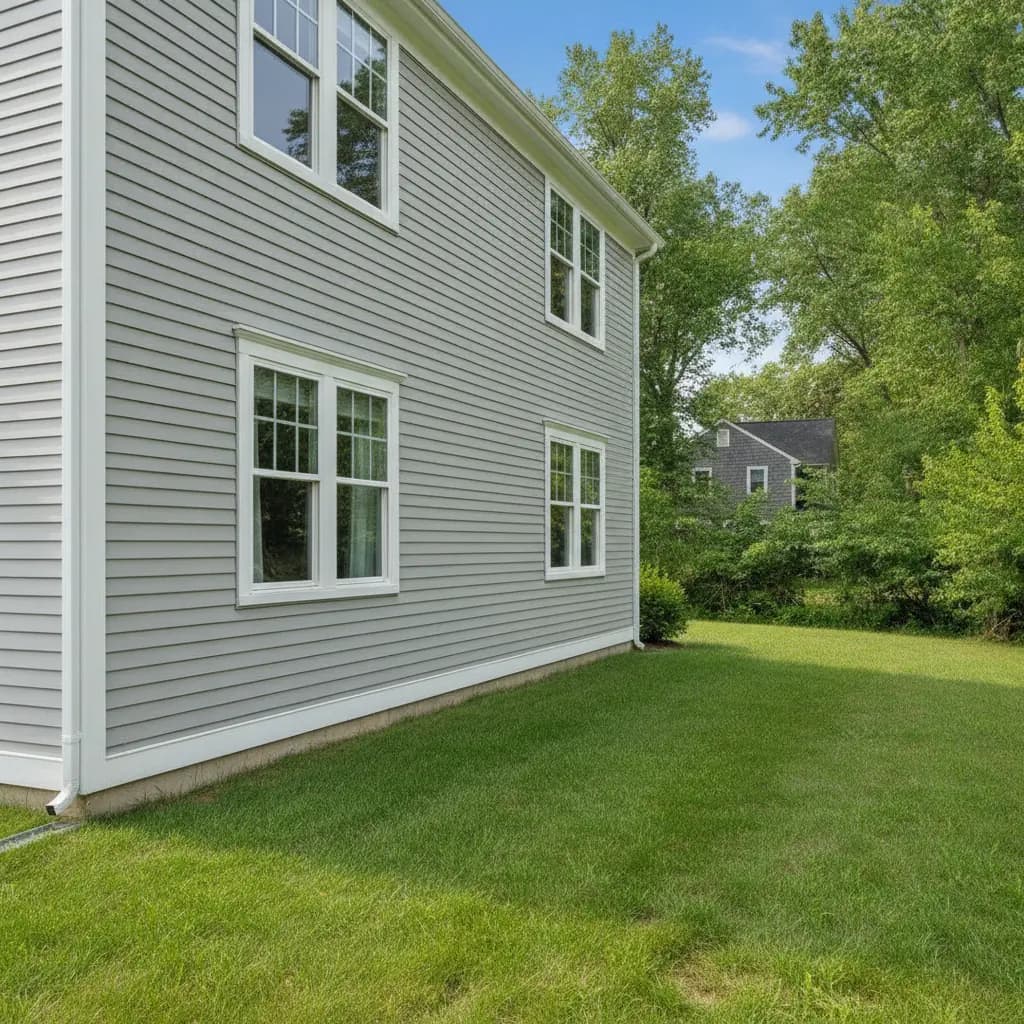
Every spring, the same scene plays out across Greater Boston: a homeowner looks up at a north wall gone green, a gray film creeping under the window sills, and the dark streaks that winter left behind. The quickest fix seems obvious. Rent a pressure washer, or type "power washing near me" and book whoever answers first.
Sometimes that works out fine. Other times, the result is water inside the wall, paint peeling off in sheets, or a window seal that starts fogging a month later. The difference usually comes down to one thing: matching the cleaning method to the surface. This guide walks through the sidings you see most often in New England, what high pressure can do to each one, and the questions worth asking before anyone points a wand at your house.
Power washing and hand washing are not the same job
Power washing (people also say pressure washing) uses a machine to push water out at high force. On hard, flat surfaces like a concrete driveway or a stone walkway, that force is exactly what you want. It blasts out ground in dirt, oil shadows and the black film that builds up where the sun does not reach.
Siding is different. It is a system of overlapping pieces designed to shed rain that falls from above, not water fired at it sideways or upward at close range. Hand washing, in the broader sense, means cleaning that relies more on contact and less on force: a cleaning solution, brushes or soft tools, and a gentle rinse. Most pros use some mix of the two depending on the surface, the dirt and the age of the house. The skill is knowing when to turn the pressure down.
The New England sidings you probably have
Vinyl is the most common siding on houses built or re-sided in the last few decades, from Brockton capes to multi-family homes in Revere. It is durable, but the panels lock together loosely so they can expand and contract with our temperature swings. That looseness is exactly what lets high pressure drive water underneath.
Wood clapboard is classic on older homes and many triple-deckers. It is usually painted, and the paint is doing a lot of work protecting the wood. Cedar shingles, common on colonials and coastal-style homes, are softer than most people expect. Direct high pressure can raise the grain, leave fuzzy streaks and even gouge the surface.
Fiber cement, often sold under brand names like HardiePlank, is tough and holds paint well, but its seams and factory finish still deserve respect. And then there are the painted older homes all over Newton and the inner suburbs, some with many layers of paint going back generations. In houses built before 1978, those older layers can contain lead, which is one more reason not to blast at them and spread chips across the yard.
What high pressure can do wrong
Water behind the siding is the big one. When a stream hits vinyl or clapboard from below, it gets pushed up under the laps and into the wall. Some of it never dries out properly, which can lead to musty smells, stained interior walls and, over time, rot in the sheathing. You may not notice anything for months.
Lifting paint is the second. Paint that already has tiny cracks lets pressurized water get underneath and pop it off. That can look like the wash "revealed" bad paint, but often it simply made a small problem much bigger. On old wood, high pressure can also tear soft fibers, open up joints and wash out caulk that was keeping water out.
Windows take a beating too. A direct hit on the glass edge or the frame can push water past weatherstripping, and on double-pane windows it can stress the seal. A failed seal often shows up later as fog or condensation trapped between the panes. Light fixtures, dryer vents, outlets and the gaps around doors are other spots where a strong stream does damage quickly.
Gentler approaches pros commonly use
Across the industry, the general idea for siding is simple: let the cleaning solution and time do the work, then rinse. Typical approaches include much lower pressure, a wider spray pattern held at a safe distance, washing from the top down so dirt runs off the wall instead of into it, and spraying at a downward angle so water follows the same path rain does.
Brushes and soft tools help on stubborn spots, especially around doors, trim and entries where hands touch and grime builds. Protecting plants, covering outlets and fixtures, and rinsing landscaping before and after are standard good habits.
There is no single right method for every house. A good pro looks at your siding, its condition and what is actually growing on it, then adapts. It is completely fair to ask any company how they plan to handle your specific surface, what pressure they will use near windows, and what they do around older paint. A clear, confident answer is a good sign.
Mildew on north walls and salt air near the coast
If one side of your house turns green or black while the others stay fairly clean, it is almost always the north side, or a wall shaded by trees or the house next door. Those walls get little direct sun, so they stay damp after rain and through our humid summers. Mildew, algae and mold love that. Blasting it off often removes the color for a few weeks while leaving the growth behind, so it comes back fast. Cleaning that treats the growth, followed by a thorough rinse, tends to last longer.
Near Revere Beach and along the coast, salt air adds another layer. A fine salty film settles on siding, trim and glass, dulls the finish and attracts more dirt. Salt residue is not something you want to drive deeper into seams. A regular gentle wash and a good rinse are usually the better routine for coastal homes, and many owners near the water plan for it at least once a year.
Inland homes deal with their own grime: spring pollen that turns everything yellow, road dust, and the salt and sand that splash up from winter roads onto the lower siding and steps.
DIY or call a pro?
A small, low single-story wall of vinyl with light dirt is a reasonable DIY job with a garden hose, a soft brush on a pole and a siding cleaner from the hardware store. Work in sections, keep the spray pointed down and rinse well.
It makes sense to call a professional when the house is two or three stories, when there is heavy mildew, when the siding is old wood, cedar or painted in many layers, or when you are not sure what you have. Ladders and pressure washers together are a common way people get hurt, and repairing water damage or repainting a wall costs far more than the wash itself. Ask whoever you hire how they will treat your siding type, your windows and your plantings.
If you are in Boston, Newton, Revere, Brockton or nearby, JC Cleaning of Home can take a look. Send a few photos of your siding and the dirty spots on WhatsApp at (857) 258-6271, or use the free quote form, and we will get back to you with a free estimate. No visit fee, and we answer in English or Portuguese.
Want a price for your home?
Send a few photos on WhatsApp and we reply with a free estimate. No visit fee.